 PropAce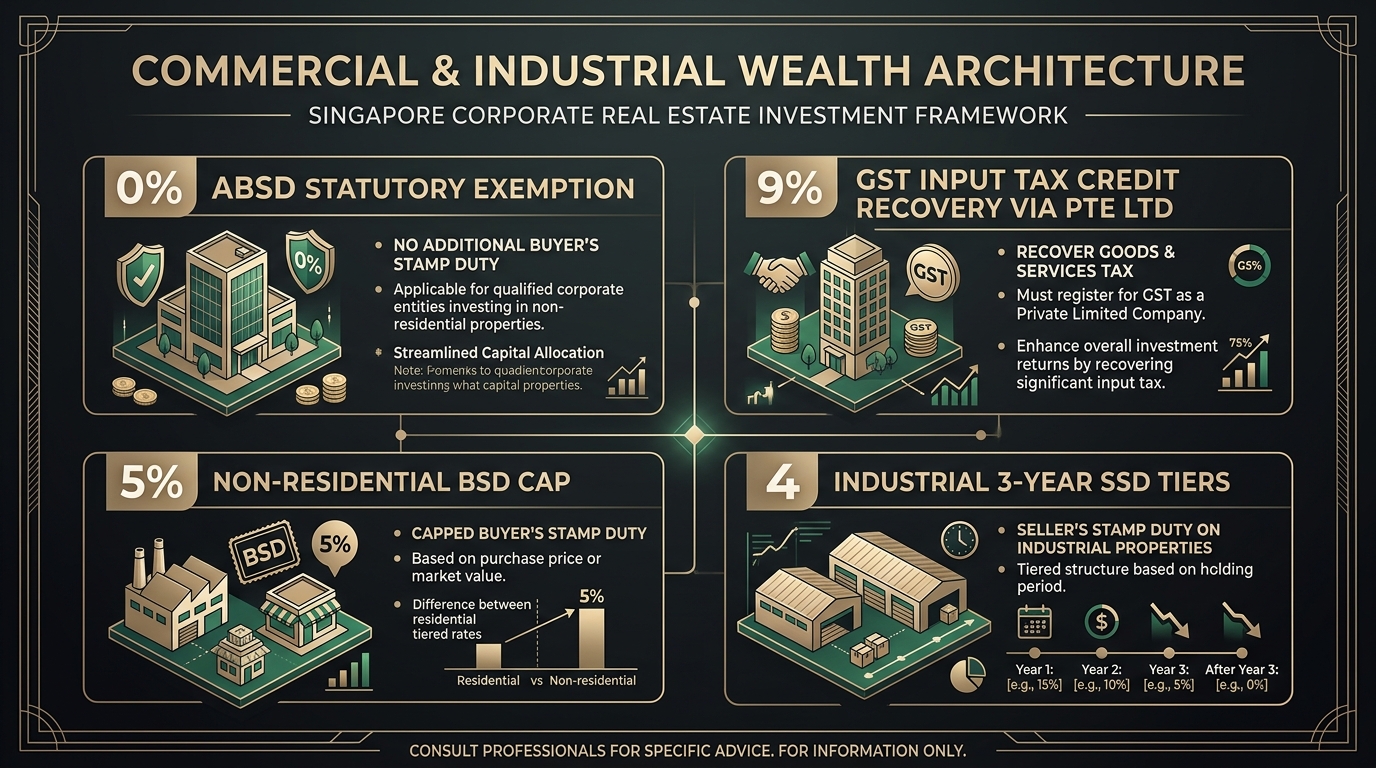
The restructuring of Singapore’s public housing model—formalised under the Ministry of National Development (MND) and the Housing & Development Board (HDB)—has permanently replaced the legacy "Mature vs. Non-Mature" estate dichotomy with a tripartite framework: Standard, Plus, and Prime.
Codified to ensure long-term affordability, mitigate windfall gains from prime-located subsidies, and preserve socio-economic diversity across central regions, this classification model introduces structural constraints that fundamentally alter capital progression timelines for Singaporean homeowners.
Executive Summary & Statutory Benchmarks
- The Core Classification Axis: Projects are classified strictly by locational attributes—proximity to city centre, transport nodes, and comprehensive commercial amenities—rather than town boundaries.
- 10-Year Minimum Occupation Period (MOP): Both Plus and Prime flats double the statutory MOP from 5 years to 10 years, restricting any transfer of equity or open-market disposal until a decade of physical occupation has elapsed.
- Subsidy Recovery (Clawback) Mechanism: Homeowners selling Plus or Prime flats on the open resale market must refund a percentage of the higher of the resale price or market valuation back to HDB (typically 6% to 8% for Plus, and 9% to 12% for Prime).
- Whole-Flat Rental Ban: Owners of Plus and Prime flats are permanently prohibited from renting out the whole flat, even after fulfilling the 10-year MOP. Only bedroom rentals are permitted.
- Resale Buyer Income Cap: Resale purchasers of Plus and Prime flats must meet strict eligibility conditions, including a S$14,000 monthly household income ceiling (or S$21,000 for multi-generational families), capping future capital appreciation.
The Tripartite Matrix: Standard vs. Plus vs. Prime
The following statutory matrix outlines the legal, financial, and operational differences governing flat categories under the Housing and Development Act (Cap. 129):
| Parameter | Standard Flats | Plus Flats | Prime Flats (PLH) |
|---|---|---|---|
| Location Profile | Islandwide (Standard estates) | Strategic town nodes / Near MRT | Ultra-prime / Central waterfront |
| HDB Subsidies Provided | Standard BTO market subsidies | Standard + Additional Subsidies | Highest Additional Subsidies |
| Minimum Occupation Period | 5 Years | 10 Years | 10 Years |
| Subsidy Recovery on Resale | None (0%) | 6% to 8% of resale price | 9% to 12% of resale price |
| Whole Flat Rental (Post-MOP) | Permitted (Subject to HDB quota) | Strictly Prohibited | Strictly Prohibited |
| Bedroom Rental (During/Post MOP) | Allowed after MOP / Bedrooms during | Bedrooms only (Post-MOP) | Bedrooms only (Post-MOP) |
| Resale Buyer Eligibility | Open (SC or SPR family) | Must meet BTO eligibility rules | Must meet BTO eligibility rules |
| Resale Income Ceiling | None on open resale market | S$14,000 / month | S$14,000 / month |
| Private Property Disinvestment | 30-month wait-out for ex-owners | 30-month wait-out for ex-owners | 30-month wait-out for ex-owners |
| Singles Eligibility (BTO / Resale) | 2-room Flexi (Islandwide) | 2-room Flexi (BTO & Resale) | 2-room Flexi (BTO & Resale) |
1. The 10-Year MOP: Strategic & Liquidity Implications
Under Section 49A of the Housing and Development Act, the statutory MOP commences from the date of physical key collection, excluding any periods of overseas detachment or non-occupation.
For a young couple balloting for a Prime or Plus flat with an average construction runway of 4.5 years: $$\text{Total Capital Commitment Horizon} = 4.5 \text{ Years (Construction)} + 10 \text{ Years (MOP)} = 14.5 \text{ Years}$$
Capital Progression Impact:
- Delayed Private Upgrading: Unlike Standard flats where owners can decouple or upgrade into private residential condominiums (or Executive Condos) after 5 years, Plus and Prime buyers are locked into their public housing equity well into their late 30s or early 40s.
- Mortgage Servicing Tenure: Entering the private market at age 40+ compresses the maximum allowable loan tenure under MAS Notice 632 from 30 years down to 25 or 20 years, elevating monthly debt servicing requirements.
2. The Subsidy Recovery Clawback: Mathematical Reality
To prevent "lottery effects" where buyers profit disproportionately from state-funded prime location subsidies, HDB imposes a statutory recovery rate on the first open-market resale.
$$\text{Net Proceeds} = \text{Resale Price} - \text{Outstanding Loan} - \text{CPF Principal Refund} - \text{CPF Accrued Interest} - (\text{Resale Price} \times \text{Clawback Rate})$$
Case Study: Resale of a Prime Flat at S$1,150,000
Assuming an initial launch price of S$620,000, sold at S$1,150,000 after the 10-year MOP with a 10% subsidy recovery rate:
- Gross Resale Price: S$1,150,000
- Subsidy Recovery Payable to HDB (10%): S$115,000
- Adjusted Gross Turnover: S$1,035,000
- CPF Housing Refund (OA Principal + 2.5% Compounded Interest ~14 yrs): ~S$420,000
- Outstanding Bank/HDB Loan: ~S$210,000
- Estimated Net Liquid Cash In Hand: S$405,000
While capital gains remain positive, the S$115,000 clawback directly reduces the buyer's liquid cash war chest for their subsequent private condominium purchase.
3. Resale Income Ceiling: The Liquidity Glass Ceiling
A critical policy nuance frequently underestimated by buyers is the S$14,000 household income ceiling imposed on future resale buyers of Plus and Prime flats.
In the unconstrained Standard flat market, million-dollar HDB flats are frequently purchased by high-income couples earning S$20,000–S$35,000 monthly who choose public housing for lifestyle convenience.
For Plus and Prime flats:
- Future resale buyers cannot earn more than S$14,000 monthly.
- Under MAS's mandatory Mortgage Servicing Ratio (MSR) cap of 30%, a couple earning S$14,000 can allocate a maximum of S$4,200 monthly toward their housing loan.
- Assuming a 25-year tenure at the MAS interest rate stress-test floor of 4.0% p.a., the maximum loan quantum achievable is approximately S$795,000.
- Consequently, if the seller demands S$1,200,000 for their resale Prime flat, the buyer must produce S$405,000 in cash and CPF downpayment. This artificial ceiling structurally restrains unchecked price inflation in secondary Plus and Prime markets.
Strategic Guidance for Prospective Homebuyers
- Long-Term Stay vs. Asset Progression: If your family objective is to settle permanently in a high-amenity central enclave with zero intent to trade up, Prime and Plus flats offer unmatched lifestyle convenience at subsidized entry points.
- Wealth Accumulation & Early Upgrading: If your five-to-eight-year milestone involves upgrading to a private condominium or Executive Condominium, Standard BTO flats remain mathematically superior due to the 5-year MOP, absence of clawback, and full open-market resale flexibility.
Need Independent Progression Modelling?
Before committing your ballot to a Plus or Prime launch, evaluate your 15-year equity curve. Connect with PropAce's Advisory Desk for a customized comparative audit between BTO classifications and Executive Condominium trajectories.
FAQ
What are the resale restrictions on Plus and Prime BTO flats compared to Standard flats?
Plus and Prime BTO flats are subject to a 10-year Minimum Occupation Period (MOP) instead of 5 years. Whole-flat renting is permanently barred even after MOP, buyers must return a percentage of the resale price as a subsidy clawback to HDB upon sale, and subsequent resale buyers must meet strict BTO-equivalent eligibility criteria (e.g. S$14,000 income ceiling).
Statutory Source: Housing & Development Board (HDB) — Standard, Plus & Prime Framework
What is the maximum CPF Housing Grant available for BTO buyers in 2026?
Eligible first-timer families can receive up to S$80,000 in Enhanced CPF Housing Grants (EHG), subject to household income tiers (up to S$9,000/month). The grant is credited directly into the applicant's CPF Ordinary Account for downpayment offset.
Statutory Source: Housing & Development Board (HDB) — CPF Housing Grants Framework
Can private property owners apply for a BTO flat immediately after selling?
No. Former private property owners must observe a statutory 30-month wait-out period from the disposal date of their private property before they can apply for a BTO flat from HDB.
Statutory Source: Housing & Development Board (HDB) — Resale Flat Eligibility & Wait-Out Requirements
Primary References & Statutory Authorities
- Housing & Development Board (HDB) (2026) Housing and Development Act 1959 (Cap. 129): Classification of Standard, Plus, and Prime Flats. Singapore: HDB InfoWEB. Available at: https://www.hdb.gov.sg
- Ministry of National Development (MND) (2026) National Day Rally Housing Policy Circular: Revised Income Ceilings and Wait-Out Measures. Singapore: MND Singapore. Available at: https://www.mnd.gov.sg
- Central Provident Fund Board (CPFB) (2026) Central Provident Fund Act 1953: Housing Scheme Withdrawal Limits and Accrued Interest Computation. Singapore: CPFB. Available at: https://www.cpf.gov.sg
- Housing & Development Board (HDB) (2026) HDB Resale Price Index (RPI) and Quarterly Public Housing Statistics. Singapore: HDB.
Interactive Strategic Tools & Concierge
Evaluate 0% ABSD commercial acquisition yield, 9% GST input tax claim, and tiered Industrial SSD.
Calculate Commercial & Industrial GST Recovery
Frequently Asked Questions
What are the resale restrictions on Plus and Prime BTO flats compared to Standard flats?
Plus and Prime BTO flats are subject to a 10-year Minimum Occupation Period (MOP) instead of 5 years. Whole-flat renting is permanently barred even after MOP, buyers must return a percentage of the resale price as a subsidy clawback to HDB upon sale, and subsequent resale buyers must meet strict BTO-equivalent eligibility criteria (e.g. S$14,000 income ceiling). Statutory Source:** [Housing & Development Board (HDB) — Standard, Plus & Prime Framework](https://www.hdb.gov.sg/cs/infoweb/residentia
What is the maximum CPF Housing Grant available for BTO buyers in 2026?
Eligible first-timer families can receive up to S$80,000 in Enhanced CPF Housing Grants (EHG), subject to household income tiers (up to S$9,000/month). The grant is credited directly into the applicant's CPF Ordinary Account for downpayment offset. Statutory Source:** Housing & Development Board (HDB) — CPF Housing Grants Framework
Can private property owners apply for a BTO flat immediately after selling?
No. Former private property owners must observe a statutory 30-month wait-out period from the disposal date of their private property before they can apply for a BTO flat from HDB. Statutory Source:** Housing & Development Board (HDB) — Resale Flat Eligibility & Wait-Out Requirements
Statutory References & Citations
- Housing & Development Board (HDB) (2026). Housing and Development Act (Cap. 129). Singapore: Ministry of National Development.
Statutory Disclaimer: This guide is published for strategic, educational, and institutional planning purposes only and does not constitute formal legal, taxation, or financial advice. All property transactions, stamp duty remissions, and financing structures should be formally verified with qualified Singapore legal counsel and certified tax advisors.