 PropAce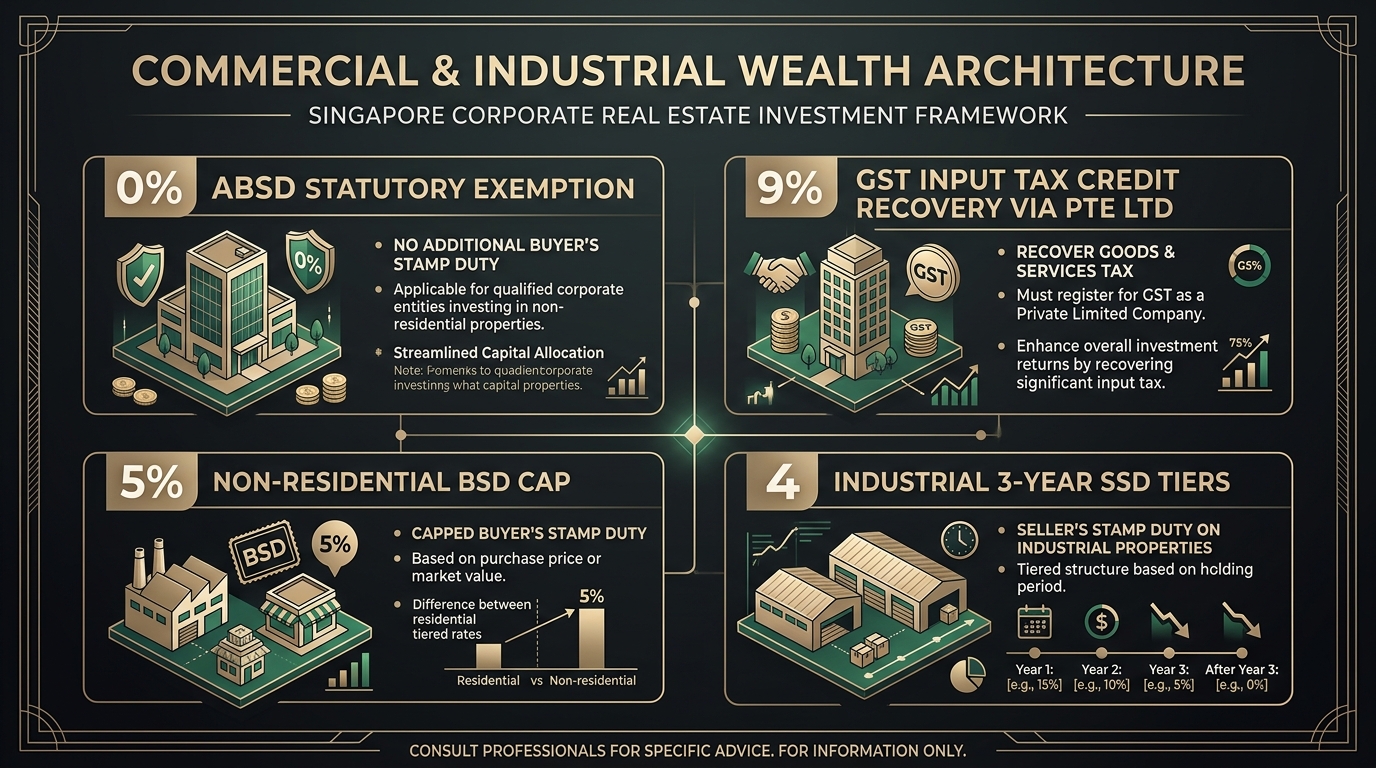
Over the past decade, Singapore has established itself as the preeminent wealth management capital of Asia. Thousands of global family enterprises, technology founders, and ultra-high-net-worth (UHNW) families have established Single Family Offices (SFOs) in the Republic, leveraging its AAA sovereign credit rating, robust legal rule of law, and competitive tax architecture.
Central to Singapore's appeal are the fund tax incentive schemes administered by the Monetary Authority of Singapore (MAS) and the Inland Revenue Authority of Singapore (IRAS) under Section 13O (Singapore Resident Fund Scheme) and Section 13U (Enhanced Tier Fund Scheme) of the Income Tax Act 1947.
However, a profound misconception exists among international wealth principals regarding real estate: many assume that establishing a 13O or 13U family office allows them to acquire luxury residential bungalows or condominiums tax-free.
In reality, Singapore enforces an impermeable statutory barrier between its fund management incentives and its residential property market.
This master guide analyzes how sophisticated family offices structure their real estate allocations in Singapore, delineating what is legally permissible inside a 13O/13U fund and how physical real estate assets—particularly conserved commercial shophouses and high-spec industrial assets—are orchestrated alongside the family office.
1. The Statutory Reality: Residential Property Exclusions
Under MAS Circulars governing Section 13O and Section 13U incentives:
- Exempt Income: Specified income derived by an approved fund from Designated Investments (DI) is completely exempt from Singapore income tax.
- The Immovable Property Carve-Out: Direct ownership of immovable property located in Singapore is explicitly excluded from the statutory definition of Designated Investments.
`` ┌────────────────────────────────────────┐ │ Family Office Investment Universe │ └──────────────────┬─────────────────────┘ │ ┌───────────────────────────┴───────────────────────────┐ ▼ ▼ ┌─────────────────────────────────┐ ┌─────────────────────────────────┐ │ Inside 13O / 13U Fund Vehicle │ │ Outside Fund (PropCo Vehicles) │ ├─────────────────────────────────┤ ├─────────────────────────────────┤ │ • Listed S-REITs & Global REITs │ │ • Conserved Commercial Shophouse│ │ • Private Real Estate Debt/Bonds│ │ • B1 / B2 Industrial Property │ │ • Real Estate Private Equity │ │ • Strata Commercial Offices │ │ • Offshore Immovable Assets │ │ • 0% ABSD Corporate Structures │ └─────────────────────────────────┘ └─────────────────────────────────┘ ``
The 65% Corporate ABSD Death-Knell
Even outside the tax exemption rules, if a corporate fund entity or institutional trust attempts to purchase residential real estate in Singapore, it triggers a flat 65% Additional Buyer's Stamp Duty (ABSD) payable in unrecoverable cash within 14 days of execution under Section 22C of the Stamp Duties Act.
Consequently, institutional family offices never purchase residential real estate within their fund structures.
2. Permissible Real Estate Strategies Inside 13O / 13U Funds
While direct Singapore residential real estate is excluded, family offices deploy hundreds of millions of dollars into real estate-linked asset classes that satisfy the Designated Investment criteria:
A. Listed Real Estate Investment Trusts (S-REITs)
Units in Singapore-listed REITs (e.g., CapitaLand Integrated Commercial Trust, Mapletree Logistics Trust) and global REITs constitute qualifying equity securities. Dividends, distributions, and capital gains derived by the fund are 100% tax-exempt.
B. Real Estate Private Credit & Mezzanine Financing
One of the fastest-growing allocations among Singapore family offices is private real estate debt:
- The family office fund acts as a senior or mezzanine lender to reputable property developers for land acquisition or construction bridge financing.
- The loans are structured as qualifying debt securities or structured notes, yielding 8% to 12% per annum.
- All interest income earned by the 13O/13U fund is statutory tax-exempt.
C. Offshore Immovable Real Estate Funds
Units in private equity real estate funds or offshore holding companies investing in prime commercial real estate in London, Tokyo, New York, or Sydney qualify as Designated Investments, shielding foreign rental income and capital gains from Singapore tax.
3. Physical Real Estate Allocation: The Commercial Shophouse Ecosystem
To hold physical domestic real estate in Singapore without suffering 65% ABSD, ultra-HNW family offices execute their direct property acquisitions parallel to the fund, utilizing dedicated Singapore Private Limited Property Holding Companies (PropCos).
Their primary asset of choice? Historic Conserved Commercial Shophouses in Districts 1 and 2 (Chinatown, Telok Ayer, Amoy Street, Tanjong Pagar).
`` ┌─────────────────────────────────┐ │ Family Principal / UHNW │ └────────────────┬────────────────┘ │ ┌─────────────────────────────┴─────────────────────────────┐ ▼ ▼ ┌─────────────────────────────────┐ ┌─────────────────────────────────┐ │ Single Family Office (SFO) │ │ Special Purpose Vehicle │ │ Section 13O / 13U Fund Entity │ │ Singapore PropCo (Pte Ltd) │ ├─────────────────────────────────┤ ├─────────────────────────────────┤ │ • S$20M / S$50M Minimum AUM │ │ • 100% Ownership of Shophouse │ │ • Equities, Bonds, Private Debt │ │ • 0% ABSD on Commercial Title │ │ • 100% Tax-Exempt Yield │ │ • 17% Flat Corporate Tax │ │ • Local Investment Mandates │ │ • Long-Term Capital Legacy │ └─────────────────────────────────┘ └─────────────────────────────────┘ ``
Why Commercial Shophouses Fit the Family Office Mandate:
- 0% Additional Buyer's Stamp Duty (ABSD): Because commercial shophouses sit on land zoned strictly "Commercial" under the URA Master Plan, acquisitions by foreign individuals, Singapore PRs, or corporate entities attract zero ABSD.
- Exemption from the Residential Property Act (RPA): Foreign principals can acquire 100% freehold or 999-year commercial shophouses without requiring approval from the Singapore Land Authority (SLA) Land Dealings Approval Unit (LDAU).
- Finite Scarcity: With only approximately 6,500 conserved shophouses in existence across the entire island, these trophy assets function as "urban gold bars" offering unparalleled wealth preservation and generational heirloom prestige.
- GST Input Tax Recovery: Buyers can purchase commercial shophouses through a GST-registered corporate entity, enabling the recovery of the 9% Goods and Services Tax (GST) charged on the commercial purchase via standard IRAS Form F5 filings.
4. Local Investment Requirement: MAS Family Office Criteria
Under prevailing MAS Section 13O and 13U guidelines, approved family offices must satisfy mandatory Local Investment Requirements:
- At least 10% of the fund’s AUM or S$10 million (whichever is lower) must be invested in local Singapore-based investments.
Qualifying Local Assets Include:
- Equities listed on approved Singapore exchanges (SGX).
- Qualifying debt securities issued by Singapore companies.
- Funds distributed by licensed Singapore fund managers.
- Direct private equity investments into unlisted Singapore operating operating entities.
Family offices frequently satisfy this local deployment mandate by subscribing to Singapore-focused private real estate credit funds or private debt issuances backed by institutional commercial developers.
5. Architectural Comparison: 13O vs. 13U Schemes
| Statutory Benchmark | Section 13O (Singapore Resident Fund) | Section 13U (Enhanced Tier Fund) |
|---|---|---|
| Minimum AUM at Application | S$20 Million | S$50 Million |
| Fund Legal Vehicle | Singapore incorporated company only (or VCC) | Any legal vehicle (Singapore or foreign company, trust, LP, VCC) |
| Annual Local Business Spending | Tiered: S$200k (AUM < $50M) to S$500k (AUM > $100M) | Minimum S$500,000 |
| Professional Investment Staff | Minimum 2 investment professionals (at least 1 non-family professional) | Minimum 3 investment professionals (at least 1 non-family professional) |
| Immovable Real Estate in Singapore | Excluded from Designated Investments | Excluded from Designated Investments |
| REITs & Real Estate Debt | Permitted & Tax-Exempt | Permitted & Tax-Exempt |
Executive Advisory Protocol for Family Principals
- [ ] Segment real estate strategy into Liquid / Debt (Inside Fund) vs Direct Immovable (Outside Fund via PropCo).
- [ ] Never introduce direct residential real estate into corporate vehicles to prevent triggering the 65% ABSD trap.
- [ ] Utilize GST-registered Singapore holding companies for District 1 & 2 commercial shophouse allocations to recover 9% GST.
- [ ] Coordinate with MAS-licensed financial institutions and legal structuring counsel to ensure family office debt funds satisfy Designated Investment criteria.
FAQ
Can Single Family Offices utilize Section 13O or 13U funds to buy residential homes ABSD-free?
No. MAS Section 13O and 13U tax incentive regimes strictly exempt designated investment income derived from qualifying financial funds. They offer zero exemptions for Singapore residential property, which remains fully subject to 65% ABSD when acquired by an entity.
Statutory Source: Monetary Authority of Singapore (MAS) — Tax Incentives for Single Family Offices (Section 13O & 13U)
What real estate assets are commonly acquired by Family Offices in Singapore?
Family Offices predominantly allocate capital toward commercial shophouses, strata commercial offices, hospitality assets, and private credit real estate mezzanine notes to benefit from 0% ABSD and capital gain exemptions.
Statutory Source: Urban Redevelopment Authority (URA) — Master Plan & Development Control Guidelines
What is the minimum AUM requirement for Section 13O family office funds in Singapore?
Under current MAS guidelines, Section 13O fund vehicles require a minimum fund size of S$20 million at the time of application and throughout the incentive tenure, alongside mandatory annual local business expenditure tiers and minimum local investment quotas.
Statutory Source: Monetary Authority of Singapore (MAS) — Tax Incentives for Single Family Offices (Section 13O & 13U)
Primary References & Statutory Authorities
- Singapore Statutes Online (2026) Stamp Duties Act 1929 (Cap. 312), Section 33A (Anti-Avoidance Arrangements). Singapore: Attorney-General's Chambers. Available at: https://sso.agc.gov.sg
- Singapore Statutes Online (2026) Stamp Duties Act 1929 (Cap. 312), Section 22C (Conveyance of Residential Property on Trust). Singapore: Attorney-General's Chambers.
- Inland Revenue Authority of Singapore (IRAS) (2026) General Anti-Avoidance Provision: Audit Framework for 99-1 Property Arrangements. Singapore: IRAS. Available at: https://www.iras.gov.sg
- Ministry of Finance (MOF) (2023) Budget 2023 & April 2023 Cooling Measures: Stamp Duty Schedules and Trust ABSD Framework. Singapore: MOF Singapore.
Interactive Strategic Tools & Concierge
Evaluate 0% ABSD commercial acquisition yield, 9% GST input tax claim, and tiered Industrial SSD.
Calculate Commercial & Industrial GST Recovery
Frequently Asked Questions
Can Single Family Offices utilize Section 13O or 13U funds to buy residential homes ABSD-free?
No. MAS Section 13O and 13U tax incentive regimes strictly exempt designated investment income derived from qualifying financial funds. They offer zero exemptions for Singapore residential property, which remains fully subject to 65% ABSD when acquired by an entity. Statutory Source:** Monetary Authority of Singapore (MAS) — Tax Incentives for Single Family Offices (Section 13O & 13U)
What real estate assets are commonly acquired by Family Offices in Singapore?
Family Offices predominantly allocate capital toward commercial shophouses, strata commercial offices, hospitality assets, and private credit real estate mezzanine notes to benefit from 0% ABSD and capital gain exemptions. Statutory Source:** Urban Redevelopment Authority (URA) — Master Plan & Development Control Guidelines
What is the minimum AUM requirement for Section 13O family office funds in Singapore?
Under current MAS guidelines, Section 13O fund vehicles require a minimum fund size of S$20 million at the time of application and throughout the incentive tenure, alongside mandatory annual local business expenditure tiers and minimum local investment quotas. Statutory Source:** Monetary Authority of Singapore (MAS) — Tax Incentives for Single Family Offices (Section 13O & 13U)
Statutory References & Citations
- Inland Revenue Authority of Singapore (IRAS) (2026). Stamp Duties Act 1929. Singapore: Government of Singapore.
- Monetary Authority of Singapore (MAS) (2026). Notice 645: Computation of Total Debt Servicing Ratio (TDSR) for Property Loans. Singapore: MAS.
Statutory Disclaimer: This guide is published for strategic, educational, and institutional planning purposes only and does not constitute formal legal, taxation, or financial advice. All property transactions, stamp duty remissions, and financing structures should be formally verified with qualified Singapore legal counsel and certified tax advisors.